
Why Finding a Certified HERS Rater Matters for Your Home
A certified HERS rater is a trained professional who inspects and tests your home’s energy performance, then assigns it a score on the HERS Index — a standard scale used across the U.S. to measure residential energy efficiency.
Here’s how to find one quickly:
- Visit the RESNET directory and search by zip code, state, or company name
- Check Mass Save’s HERS Rater list if you’re in Massachusetts
- Verify your rater’s certification status individually — the RESNET directory lists member companies, not all certified raters
- In California, search through CHEERS for state-approved raters
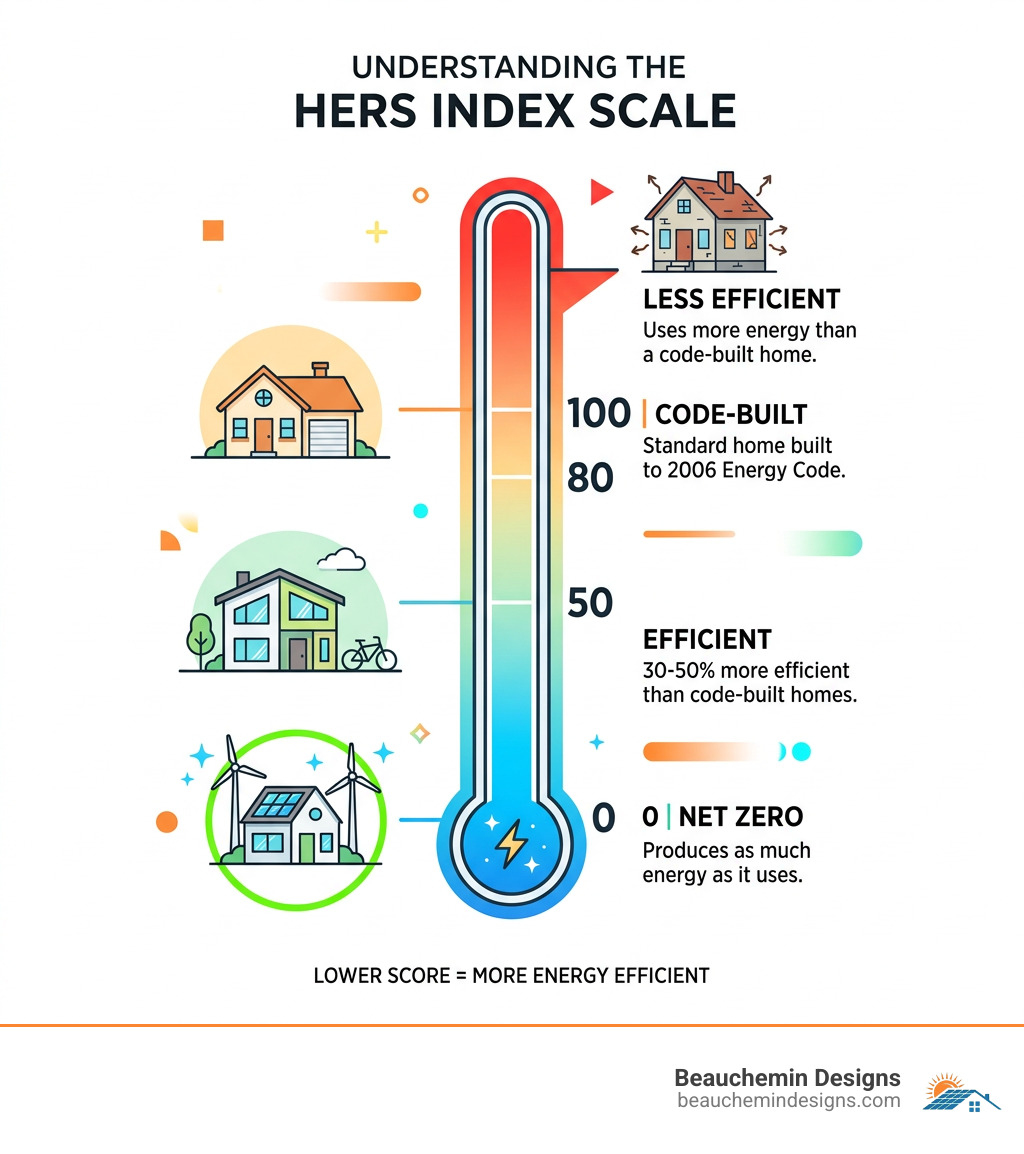
If you’re building a new home, doing a major renovation, or trying to qualify for programs like ENERGY STAR or Mass Save, you’ll almost certainly need one. A lower HERS score means a more energy-efficient home. A score of 100 represents a standard home built to 2006 code. A score of 0 means the home produces as much energy as it uses — net zero.
The problem most homeowners and builders run into isn’t understanding what a HERS rater does. It’s knowing how to find the right one, how to verify their credentials, and how to bring them into your project at the right time.
I’m Edward Beauchemin, a residential designer and building performance specialist with decades of experience in high-performance home construction across New England — and as the owner of Energy Geeks, I work directly with certified HERS raters on projects that require real results, not just paperwork. This guide will walk you through everything you need to locate and work with a qualified certified HERS rater without the usual confusion.
What is a HERS Rating and How Does the Index Work?
To understand why a certified HERS rater is so critical, we first have to look at the yardstick they use: the HERS Index. Developed by the Residential Energy Services Network (RESNET), the Home Energy Rating System (HERS) Index is the industry standard by which a home’s energy efficiency is measured. It is the only nationally recognized system for inspecting and calculating a home’s energy performance.
The HERS Index works on a relative scale. A score of 100 represents the “Reference Home,” which is a home built to the specifications of the 2006 International Energy Conservation Code (IECC). If a home scores a 70, it is 30% more energy-efficient than the 2006 baseline. If it scores a 0, it is a Net Zero Energy home, meaning it produces as much energy as it consumes over the course of a year.
The rating isn’t just a “guess” based on the square footage. It involves a complex energy modeling process where the rater analyzes construction plans and performs on-site diagnostic testing. They look at everything from insulation levels and window efficiency to HVAC performance and air leakage. To learn more about the HERS Index scoring system, you can explore the official RESNET resources which detail how variables like climate zone and local utility rates factor into the final number.
Why Hire a Certified HERS Rater for New Construction?
In New England, hiring a certified HERS rater isn’t just a “nice to have”—it’s often a legal or financial necessity. Many municipalities in Massachusetts have adopted the “Stretch Code,” which requires new homes to meet specific HERS targets to receive a building permit.
Beyond basic compliance, working with a rater offers several high-value benefits:
- Program Qualification: You cannot achieve ENERGY STAR Certification or participate in the Mass Save New Construction program without a certified professional verifying the work.
- Financial Incentives: Builders can qualify for the federal 45L Tax Credit, which provides thousands of dollars in incentives for homes that meet high-efficiency standards.
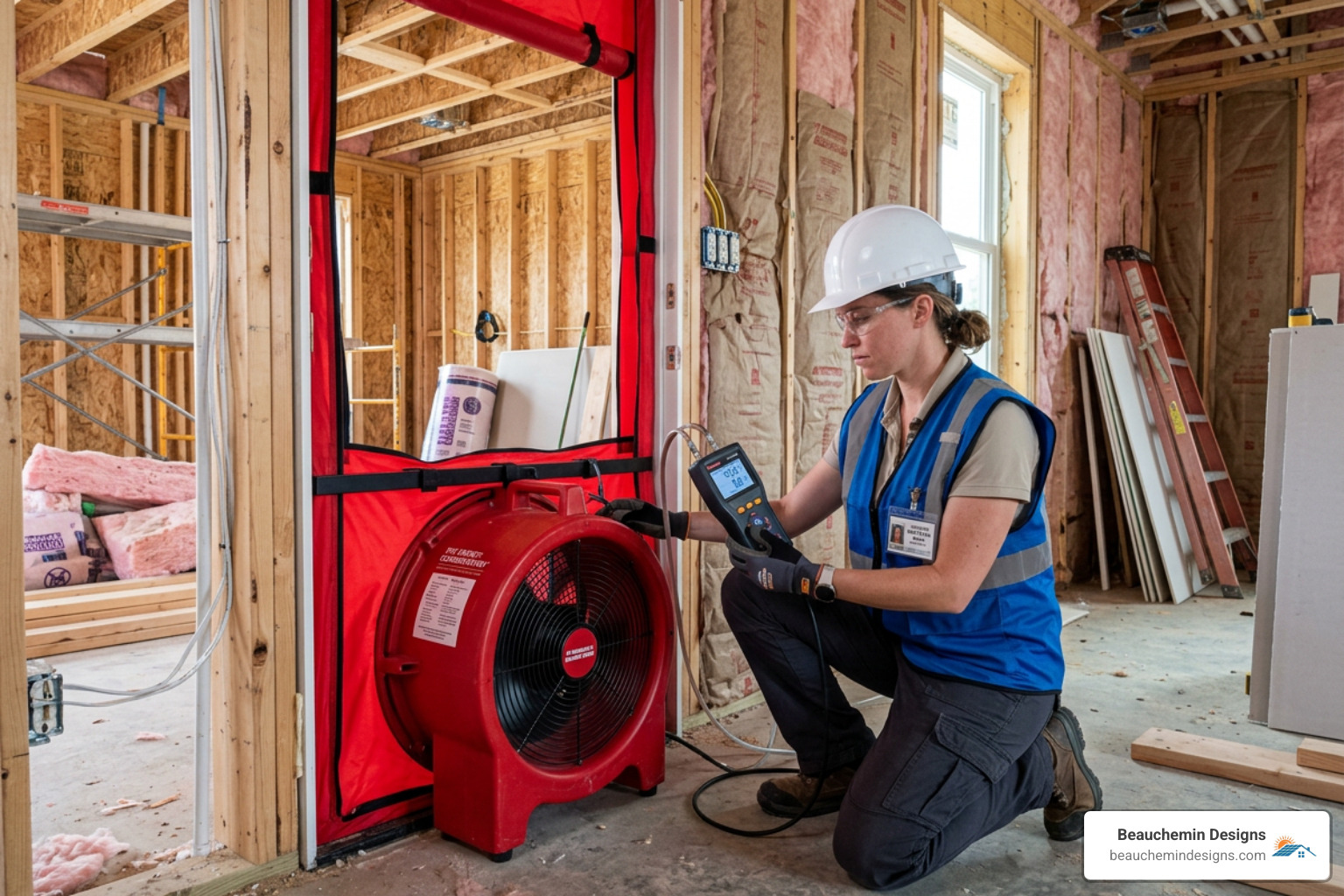
- Quality Control: A rater acts as a third-party inspector. They ensure the insulation is installed correctly and that the home hits its blower door targets for airtightness.
- Lower Operating Costs: For homeowners, a lower HERS score translates directly to lower monthly utility bills and a more comfortable living environment.
At Beauchemin Designs, we believe in energy conservation and renewable energy as the foundation of every design. By bringing a rater into the fold early, we can adjust the architectural plans to ensure the home hits its performance goals before a single nail is driven.
The Path to Becoming a Certified HERS Rater
Becoming a certified HERS rater is a rigorous process. It isn’t a weekend seminar; it’s a professional credential overseen by RESNET to ensure high levels of quality assurance across the industry. This rigor is what gives builders and homeowners confidence that the “score” on the certificate actually reflects reality.
The journey begins with training through an accredited provider. Candidates must complete a combination of classroom instruction and field training. In our region, many professionals get certified through NEHERS, which offers a hybrid training model including 36 hours of online study followed by 5 days of intensive classroom and field work.
One of the most important things to understand is that all requirements—including exams and probationary ratings—must be completed within a 15-month window. Candidates must also sign a Rater Agreement with an accredited Rating Provider, who provides ongoing oversight and quality assurance.
Training and National Exam Requirements
To prove they have the technical chops, prospective raters must pass three major national exams:
- National Rater Exam: A 55-question test covering building science, software modeling, and RESNET standards. A passing score of 40 out of 55 is required.
- Combustion Appliance Simulation: This test ensures the rater understands how to test for backdrafting and carbon monoxide safety in homes with gas or oil appliances. A passing score of 85% is required.
- Rater Simulation Practical Test: This is a “virtual” field inspection where the candidate must identify building components and perform testing in a simulated environment. A passing score of 73% is required.
Probationary Ratings and Quality Assurance
Even after passing the exams, a candidate isn’t “certified” yet. They must complete a minimum of 5 probationary ratings under the supervision of a RESNET-certified Candidate Field Assessor. Typically, two of these are done during the initial training, and the remaining three are completed in the field on real projects.
Once fully certified, the rater’s work is constantly monitored by their Rating Provider. To maintain the integrity of the HERS Index, providers must perform quality assurance (QA) reviews on at least 10% of all energy ratings (file reviews) and 1% of ratings in the field. This ensures that if a rater says a home is airtight, it actually is.
Essential Services Provided by HERS Professionals
A certified HERS rater provides a suite of diagnostic services that go far beyond a simple visual walkthrough. They use specialized equipment to measure the “invisible” aspects of a home’s performance.
- Blower Door Testing: This measures the total air leakage of the building envelope. It’s essential for ensuring airtight construction and energy efficiency.
- Duct Blaster Testing: This tests for leaks in the HVAC ductwork. Leaky ducts can waste 20% or more of the energy used to heat or cool a home.
- Thermal Imaging: Using infrared cameras, raters can see “cold spots” where insulation is missing or where air is bypassing the thermal barrier.
- Ventilation Testing: Raters ensure that as homes get tighter, the indoor air quality remains high by verifying that mechanical ventilation systems are moving the right amount of air.
To help you understand the different players in the HERS world, here is a quick breakdown:
| Role | Primary Responsibility | Certification Level |
|---|---|---|
| Certified HERS Rater | Full inspections, modeling, and final HERS score issuance. | Highest (Full) |
| Rating Field Inspector (RFI) | Conducts on-site data collection and testing under a Rater’s supervision. | Entry/Field Level |
| HERS Modeler | Focuses specifically on the software input and energy analysis of plans. | Specialized |
Understanding the Role of a Certified HERS Rater in Design
At Beauchemin Designs, we advocate for an “envelope-first” approach. This means we focus on insulation and airtightness before picking out high-end HVAC systems. A certified HERS rater is a key partner in this process.
During the design phase, the rater performs Plan Modeling. They take our architectural drawings and plug them into accredited software to predict the HERS score. This allows us to see if we need to upgrade the windows or add more sub-slab insulation to meet a specific target. They also provide Manual J Reports, which are used to correctly size heating and cooling equipment. This is especially important when integrating high-efficiency systems like geothermal heat pumps.
Recently, RESNET introduced the HERS Modeler Certification, which standardizes the training for those who specialize in the data-entry side of the rating process. This ensures that the inputs used to calculate your home’s energy future are accurate and consistent.
How to Locate and Verify a Professional in Your Area
Finding a certified HERS rater in New England is relatively straightforward if you know where to look. However, you should distinguish between a “Rating Provider” (the parent company) and the individual rater doing the work.
- The RESNET Directory: This is the “Gold Standard” for finding HERS professionals nationwide. You can search by zip code to find companies serving your area.
- Mass Save Directory: For those in Massachusetts, Mass Save maintains a list of approved HERS companies that are eligible to process utility rebates.
- Local Referrals: Ask your architect or builder. Because we work in the high-performance space, we maintain close relationships with raters who understand the nuances of the New England climate.
How to Verify a Certified HERS Rater’s Credentials
Just because someone has a website doesn’t mean their certification is active. To protect your investment, you should always verify their standing:
- Check the Registry: Use the RESNET registry search to ensure the individual rater is listed and in good standing.
- Ask About Continuing Education: Raters are required to complete 18 hours of professional development every 3 years to maintain their certification.
- Regional Registries: If you are working on a project in California, you must use state-specific registries like CHEERS or the Golden State Registry (GSR) to verify raters approved for Title 24 compliance.
Frequently Asked Questions about HERS Ratings
What is the difference between a HERS Rater and a Rating Field Inspector (RFI)?
A certified HERS rater is the lead professional responsible for the final rating and compliance. An RFI is an entry-level professional who can perform the physical field inspections and data collection, but their work must be reviewed and signed off by a certified rater.
How long does a HERS certification last before recertification is required?
A HERS rater certification is valid for three years. To recertify, the rater must complete 18 hours of RESNET-approved professional development or attend a RESNET-approved conference. If a rater has been inactive, they may also be required to undergo additional field evaluations.
Can a HERS rating help my home qualify for federal tax credits?
Yes! A HERS rating is the primary tool used to verify eligibility for the 45L Tax Credit for energy-efficient new homes. It also helps homeowners qualify for “Energy Efficient Mortgages” (EEMs), which can provide better financing terms for high-performance properties.
Conclusion
Navigating home energy performance doesn’t have to be a headache. Whether you are a builder trying to meet the Massachusetts Stretch Code or a homeowner dreaming of a net-zero sanctuary, a certified HERS rater is your most valuable ally. They provide the data, the testing, and the verification needed to turn a set of drawings into a measurably superior home.
At Beauchemin Designs, we specialize in climate-responsive residential architecture that thrives in the demanding New England environment. From our historic duplex project in Mansfield, MA to our two-family historic home in Blackstone, we integrate HERS modeling and building science into every project we touch.
If you’re ready to start your journey toward a more efficient, durable, and comfortable home, we’re here to help. Contact a specialist for your HERS rated home design today, and let’s build something that performs as beautifully as it looks.