
If you’re building a new home in New England, you will almost certainly hear the term HERS rating. In many towns across Massachusetts, Rhode Island, and Connecticut, it’s no longer optional — it’s required.
But beyond compliance, a HERS rating is one of the most powerful tools available for designing a home that performs efficiently, comfortably, and predictably for decades.
At Beauchemin Designs, we integrate HERS modeling early in the design process because performance should not be “checked” at the end. It should be designed into the home from day one.
What Is a HERS Rating?
HERS stands for Home Energy Rating System. It is the nationally recognized standard for measuring a home’s energy performance.
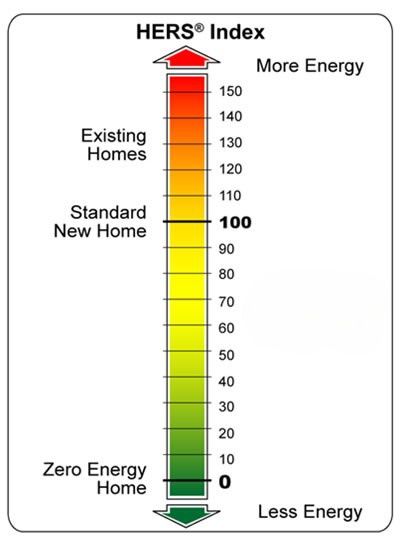
The result of a HERS analysis is a HERS Index Score, a numerical value that represents how efficiently a home is designed and built.
Here’s how the scale works:
- 100 = A home built to early 2000s energy code standards
- 0 = A net-zero energy home
- Lower score = better performance
Most existing homes in New England score 120–140+, and many new homes built to current Stretch Codes fall in the 52–60 range.
The HERS score evaluates the entire home as a system, including:
- Insulation levels
- Air leakage (blower door results)
- Window performance
- HVAC efficiency
- Ventilation systems
- Water heating
- Duct leakage
- Renewable energy systems (if present)
It is not a guess. It is based on energy modeling and verified field testing.
Why HERS Ratings Matter More in New England
New England has one of the most demanding residential climates in the United States.
As outlined in How to Build a Healthier, More Efficient, High-Performance Home in New England’s Climate, our region faces:
- Long, cold winters
- Humid summers
- Significant freeze–thaw cycles
- High precipitation
- Coastal salt exposure (in many communities)
Heating alone can account for 60–70% of residential energy use in this region. That makes envelope performance and energy modeling critically important.
Because of these climate pressures, states have adopted aggressive energy codes:
- Massachusetts Stretch Code & Specialized Stretch Code
- Rhode Island IECC-aligned codes and utility requirements
- Connecticut IECC 2021 adoption
Many compliance pathways now require or heavily rely on HERS modeling. In other words, if you are building a new home in New England, HERS is central to both performance and permitting.
How a HERS Rating Is Created
A certified HERS rater performs two major steps:
1. Energy Modeling (Design Phase)
Before construction begins, the home is modeled using specialized software. This model accounts for:
- Insulation assemblies
- Window U-values and solar heat gain coefficients
- Air sealing assumptions
- HVAC system type and efficiency
- Ventilation strategy
- Water heating system
- Orientation and glazing layout
This modeling predicts annual energy use and produces a projected HERS score.
This is why Beauchemin Designs integrates energy modeling early by partnering with Energy Geeks. When used properly, HERS is not a post-construction report card — it’s a design decision tool.
2. Performance Testing (Construction Phase)
After the home is built, field testing verifies that it performs as designed.
Key tests include:
Blower Door Testing
Measures airtightness. Results are expressed in ACH50 (air changes per hour at 50 Pascals).
- Code minimums often allow up to 3.0 ACH50
- High-performance homes often target 1.0–2.0 ACH50
Duct Leakage Testing
Ensures HVAC ductwork does not leak energy—especially important when ducts run outside conditioned space.
Without verification, modeling assumptions mean very little. HERS combines modeling with measured performance.
The Biggest Factors That Influence a HERS Score
While many components are evaluated, envelope performance has the greatest impact.
1. Insulation & Thermal Boundary
Continuous insulation, high R-values, and minimized thermal bridging significantly reduce heating demand. In New England’s climate, an insulation strategy is foundational. Improving the envelope reduces heating loads, allowing for smaller mechanical systems.
2. Airtightness
Air leakage is one of the largest sources of heat loss in cold climates.
Lower air leakage:
- Reduces energy consumption
- Improves comfort
- Controls moisture migration
- Enhances durability
Tighter homes consistently achieve better HERS scores.
3. Windows & Doors
Windows are the weakest link in the thermal envelope. Triple-pane windows and orientation-sensitive glazing can substantially improve modeled performance.
4. HVAC Efficiency & Sizing
High-efficiency cold-climate heat pumps perform extremely well when paired with low-load envelopes. Oversized systems hurt performance and comfort. Proper load calculations are essential.
5. Renewables
Solar PV can significantly lower a HERS score, but the most cost-effective path is to reduce loads first. Envelope-first design yields greater, more durable improvements than relying on renewables alone.
HERS and New England Energy Codes
The regional trend is clear: performance thresholds are tightening.
Massachusetts
Stretch and Specialized Stretch Codes often require HERS scores in the low-to-mid 50s, depending on pathway and electrification requirements.
Rhode Island
Utility-driven programs and state codes often target HERS 55–60 for new construction incentives.
Connecticut
IECC 2021 performance paths incorporate HERS modeling, with increasing efficiency requirements.
HERS is no longer a marketing tool. It is embedded in compliance pathways.
Why HERS Matters for Homeowners (Beyond Code)
Many homeowners assume HERS is just paperwork. It is not.
A strong HERS score translates directly into:
Lower Operating Costs
Reduced heating and cooling loads mean long-term savings in a high-energy-cost region.
More Stable Indoor Comfort
High-performance homes:
- Maintain even temperatures
- Reduce drafts
- Control humidity
- Minimize cold spots
Improved Indoor Air Quality
Because airtight homes require controlled ventilation (ERVs/HRVs), air is filtered and fresh — rather than leaking in randomly.
Increased Resale Value
Energy efficiency is no longer niche. It is a competitive advantage in the housing market. A documented HERS score provides measurable proof of performance.
HERS as a Design Tool (Not Just a Score)
At Beauchemin Designs, we use HERS modeling to evaluate options during design:
- Should we increase exterior insulation?
- Is triple glazing worth it on this elevation?
- Can we downsize HVAC equipment?
- What’s the most cost-effective way to meet Stretch Code?
Because modeling happens early, we can test strategies before they become expensive changes in the field.
This systems-based approach aligns with the broader principles outlined in How to Build a Healthier, More Efficient, High-Performance Home in New England’s Climate — where envelope, mechanical systems, orientation, and materials are treated as interconnected decisions.
What Is a “Good” HERS Score?
The answer depends on your goals.
- 70–80: Better than code-minimum homes of the past
- 55–60: Typical for Stretch Code compliance
- 40–50: High-performance, electrification-ready homes
- 0–30: Near net-zero
The right target balances cost, incentives, comfort, and long-term value.
Chasing the lowest number without strategy is not always the most intelligent investment. Strategic improvements matter more than headline scores.
The Future of HERS in New England
HERS is evolving. Future energy standards are expected to incorporate:
- Electrification readiness
- Load flexibility
- Battery integration
- Carbon intensity modeling
As the grid decarbonizes and electrification accelerates, homes must be designed with future performance in mind — not just current code compliance.
Designing for tomorrow’s standards today reduces retrofit costs later.
Common Misconceptions About HERS
“Solar alone guarantees a good score.”
Not necessarily. Reducing loads first is more durable and cost-effective.
“It’s just about insulation.”
Airtightness, HVAC design, ventilation, and water heating all matter significantly.
“It’s only required in Massachusetts.”
Rhode Island and Connecticut increasingly rely on HERS-based compliance pathways.
“It’s just a number.”
It is a systems-based performance measurement tied directly to comfort and durability.
Designing with Performance from the Start
In New England’s climate, sustainability is not an aesthetic preference. It is a structural necessity. High heating demands, humidity swings, and evolving codes mean homes must be carefully designed to perform.
A HERS rating provides:
- Measurable accountability
- Code compliance clarity
- Incentive eligibility
- Long-term performance validation
When integrated early, it shapes smarter decisions about insulation, windows, HVAC, ventilation, and renewable integration.
At Beauchemin Designs, we treat performance as architecture — not an afterthought.
HERS FAQs
What does HERS stand for?
Home Energy Rating System.
Is a HERS rating required for all new homes?
In many New England municipalities using Stretch or performance codes, yes.
What is a good HERS score in Massachusetts?
Typically between 52–55 for Stretch Code compliance, though this varies by pathway.
Does a lower HERS score mean lower utility bills?
Generally, yes — lower scores reflect reduced modeled energy use.
Can you improve a HERS score after construction?
Yes, but improvements are far more cost-effective when integrated during design.
Ready to Design with Performance in Mind?
A HERS rating should never be an afterthought. The strongest results are achieved when energy modeling, envelope strategy, and mechanical coordination are integrated from the outset of the design process.
At Beauchemin Designs, we combine architectural creativity with building science expertise to ensure your new home is not only beautiful—but measurably efficient, code-compliant, and built for New England’s demanding climate.
If you’re planning a new custom home or exploring performance upgrades, we’re here to help you design smarter from day one.
Contact Beauchemin Designs to start the conversation about building a high-performance home that delivers comfort, efficiency, and long-term value.