
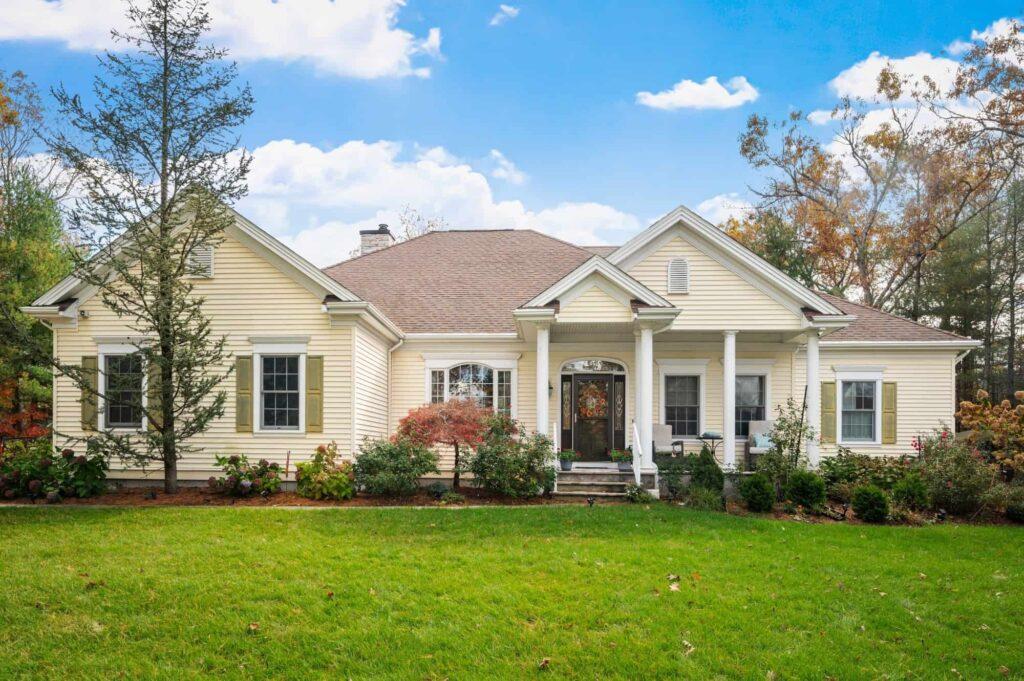
Architectural beauty is easy to recognize. A well-proportioned façade, thoughtful materials, clean rooflines, and carefully placed windows can make a home feel timeless from the moment you see it.
But true excellence in residential design goes deeper than appearance.
In New England, where homes endure long heating seasons, high humidity, coastal exposure, and freeze–thaw cycles, performance is not optional. A custom home must do more than look beautiful—it must function efficiently, feel comfortable year-round, and remain durable for decades.
Designing a custom home that performs as beautifully as it looks requires an integrated approach—one rooted in building science, climate awareness, and early-stage decision-making.
Why Performance Matters in New England Homes
New England presents one of the most demanding residential climates in the country. Homes must withstand:
- Extended cold-weather heating loads
- Moisture migration and condensation risks
- Rapid temperature fluctuations
- Coastal wind and salt exposure in certain regions
- Increasingly variable seasonal weather patterns
These conditions magnify the consequences of poor design decisions.
A home that prioritizes aesthetics without addressing building envelope continuity, insulation strategy, and mechanical coordination may look impressive on paper—but struggle with drafts, uneven temperatures, or high energy costs once built.
A high-performance custom home, by contrast, is designed from the outset to respond to these realities. Performance is not an upgrade layered on at the end; it is foundational.
The Envelope-First Design Philosophy
The most important performance decisions in a custom home are often invisible once construction is complete.
An envelope-first approach prioritizes the building enclosure—the system of walls, roof, foundation, windows, and air barriers that separate interior from exterior.
When designed correctly, the envelope controls:
- Heat flow
- Air leakage
- Moisture movement
- Comfort stability
In New England’s climate, insulation continuity and airtight construction are especially critical. Gaps in the thermal boundary create cold surfaces, which can lead to condensation and long-term durability issues.
A high-performance custom home integrates insulation, air sealing, and vapor control strategies early in the architectural design. Window placement is evaluated not just for symmetry and light, but for solar gain, seasonal shading, and thermal performance.
The result is a home that maintains stable indoor temperatures and avoids the common “hot room / cold room” problem found in many conventionally built houses.
Beauty and Performance Are Not Opposites
There is a persistent myth that sustainable or energy-efficient homes must look modern, minimal, or industrial. In reality, performance has no fixed aesthetic.
A high-performance home in New England can be:
- A traditional Cape
- A shingle-style coastal residence
- A farmhouse-inspired design
- A contemporary structure
- Or a classic colonial
Architectural language and performance strategy are independent variables. What matters is how the home is assembled.
Thoughtful roof overhangs can enhance both appearance and moisture protection. Window groupings can be proportioned for visual rhythm while maintaining high-performance glazing standards. Durable materials can be selected for longevity without sacrificing character.
The goal is cohesion—where the technical decisions support the architecture rather than constrain it.
Energy Modeling as a Home Design Tool
In high-performance residential design, energy modeling should not be treated as a late-stage compliance check. It is most powerful when used early in the process.
By modeling projected energy performance during the design phase, architects and homeowners can evaluate how changes to insulation levels, window specifications, and mechanical systems influence overall efficiency.
This proactive approach allows the design to evolve intentionally, rather than reactively.
In Massachusetts, where HERS ratings and Stretch Energy Codes often apply, early modeling also reduces the risk of redesign during permitting. In Rhode Island, where energy standards are increasingly emphasized, modeling supports informed decision-making before construction begins.
When performance and aesthetics are evaluated from the outset, the final design reflects both.
Mechanical Systems: Right-Sized, Not Oversized
Mechanical design is another area where appearance and performance intersect.
An oversized heating system may compensate for envelope weaknesses, but it increases cost and reduces efficiency. Conversely, a right-sized heat pump system paired with a well-designed envelope can deliver consistent comfort at lower operating costs.
In New England, air-source heat pumps have become increasingly viable due to advances in cold-climate technology. When integrated with balanced ventilation systems and proper duct design, they provide both heating and cooling efficiently.
Ventilation is equally important. Airtight homes require controlled fresh air strategies to maintain indoor air quality. Balanced ventilation systems ensure that fresh air is delivered without compromising thermal performance.
When coordinated properly, mechanical systems become part of the architecture rather than an afterthought.
Designing for Durability
A beautiful home that fails prematurely is not sustainable.
Durability is deeply tied to moisture management—particularly in cold climates where condensation can occur within wall assemblies.
Design strategies that improve durability include:
- Proper drainage planes and flashing details
- Roof designs that manage snow loads and ice dam risks
- Thoughtful material transitions
- Ventilation strategies that prevent moisture accumulation
Material selection also plays a significant role. Durable cladding systems, appropriate roof materials, and well-detailed trim assemblies reduce long-term maintenance while preserving architectural integrity.
In New England, resilience is part of good design.
Site-Responsive Architecture
Performance does not begin at the wall—it begins at the site.
Orientation, topography, and solar access influence how a home performs throughout the year. South-facing glazing can provide passive solar gain during winter months, while overhangs can reduce overheating in summer.
Drainage patterns and soil conditions influence foundation design and long-term structural integrity.
Even prevailing wind patterns can affect window placement and entry design.
A custom home that performs well is not simply placed on a site—it is shaped by it.
Comfort as a Design Goal
While energy efficiency often receives the most attention, comfort is what homeowners experience daily.
A high-performance home should feel:
- Evenly heated and cooled
- Quiet and well-insulated from exterior noise
- Free from drafts
- Fresh and well-ventilated
Comfort is the lived result of sound building science. Stable surface temperatures, airtight construction, and balanced ventilation create an indoor environment that feels consistent and calm.
When comfort and aesthetics align, a home becomes more than a structure—it becomes a reliable refuge.
Integrating Code Compliance Without Compromising Design
Energy codes continue to evolve across New England. Massachusetts’ Stretch and Specialized Stretch Codes have raised performance expectations, and other states are following similar trajectories.
Rather than treating these requirements as obstacles, they can be used to elevate design quality.
By incorporating compliance targets early—through energy modeling, envelope planning, and mechanical coordination—design intent remains intact while meeting regulatory standards.
This approach avoids the last-minute redesigns that often occur when performance is treated as secondary.
Collaboration Is Essential
Designing a high-performance custom home requires collaboration between the architect, builder, and energy professionals.
Clear construction documents, coordinated details, and consistent communication ensure that the performance goals established during design are realized in the field.
Verification testing—such as blower door testing—confirms that the home performs as intended. When design and field verification align, the result is predictability rather than guesswork.
An integrated process protects both the homeowner’s investment and the architectural vision.
The Long-Term Value of Performance
High-performance homes offer tangible long-term benefits:
- Lower operating costs
- Reduced maintenance issues
- Improved indoor air quality
- Greater durability
- Higher resale appeal
Beyond economics, they provide peace of mind. Homeowners can feel confident that their home is not only visually compelling but also resilient against New England’s demanding climate.
Designing a custom home that performs as beautifully as it looks is not about excess complexity. It is about thoughtful integration—where architecture, building science, and climate awareness work together.
Building for the Way New England Lives
In New England, a truly successful custom home must satisfy two equally important criteria: architectural integrity and technical performance.
When beauty and building science are aligned from the earliest design stages, the result is a home that feels timeless, operates efficiently, and stands up to the realities of climate and code.
A well-designed home should not ask homeowners to choose between aesthetics and performance. It should deliver both—quietly, consistently, and for decades to come.
Contact Beauchemin Designs to start a conversation about designing a custom home tailored to your property, your goals, and the way you want to live.
Frequently Asked Questions About Custom Home Designs in New England
What is a high-performance custom home?
A high-performance custom home is designed to deliver superior energy efficiency, comfort, durability, and indoor air quality. Rather than focusing only on appearance, it integrates building science principles—such as airtight construction, insulation continuity, and right-sized mechanical systems—into the architectural design from the beginning.
Are high-performance homes more expensive to build?
Initial construction costs can be slightly higher depending on materials and systems, but thoughtful design often offsets expenses through smaller mechanical systems and long-term energy savings. Over time, lower operating costs, reduced maintenance, and improved durability frequently provide meaningful financial value.
How does New England’s climate influence custom home design?
New England’s long heating season, humidity levels, and freeze–thaw cycles require careful attention to insulation, moisture management, air sealing, and ventilation. Designing for these conditions improves comfort, prevents durability issues, and ensures the home performs reliably year-round.
What role does energy modeling play in custom home design?
Energy modeling helps evaluate how design decisions—such as window placement, insulation levels, and mechanical systems—affect overall performance. When used early in the process, it allows architects and homeowners to make informed adjustments before construction begins.
Do high-performance homes still allow for traditional architectural styles?
Yes. Performance strategies are independent of architectural style. A high-performance home can reflect traditional New England architecture, contemporary design, or anything in between. The goal is to integrate building science without compromising aesthetic vision.