
Why Aging Friendly Closet Systems Belong in Every Long-Term Home Plan
Aging friendly closet systems are one of the most practical upgrades you can make to support long-term independence at home. Here are the top options to look for:
- Fixed, floor-based or wall-anchored systems: steady enough to lean on or lightly brace against without shifting
- Pull-down rods: make high storage usable without overreaching or climbing on a step stool
- Full-extension, soft-close drawers: bring contents forward so you do not have to bend deep into the closet
- Motion-activated LED lighting: improves visibility right away and helps reduce fall risk in dim spaces
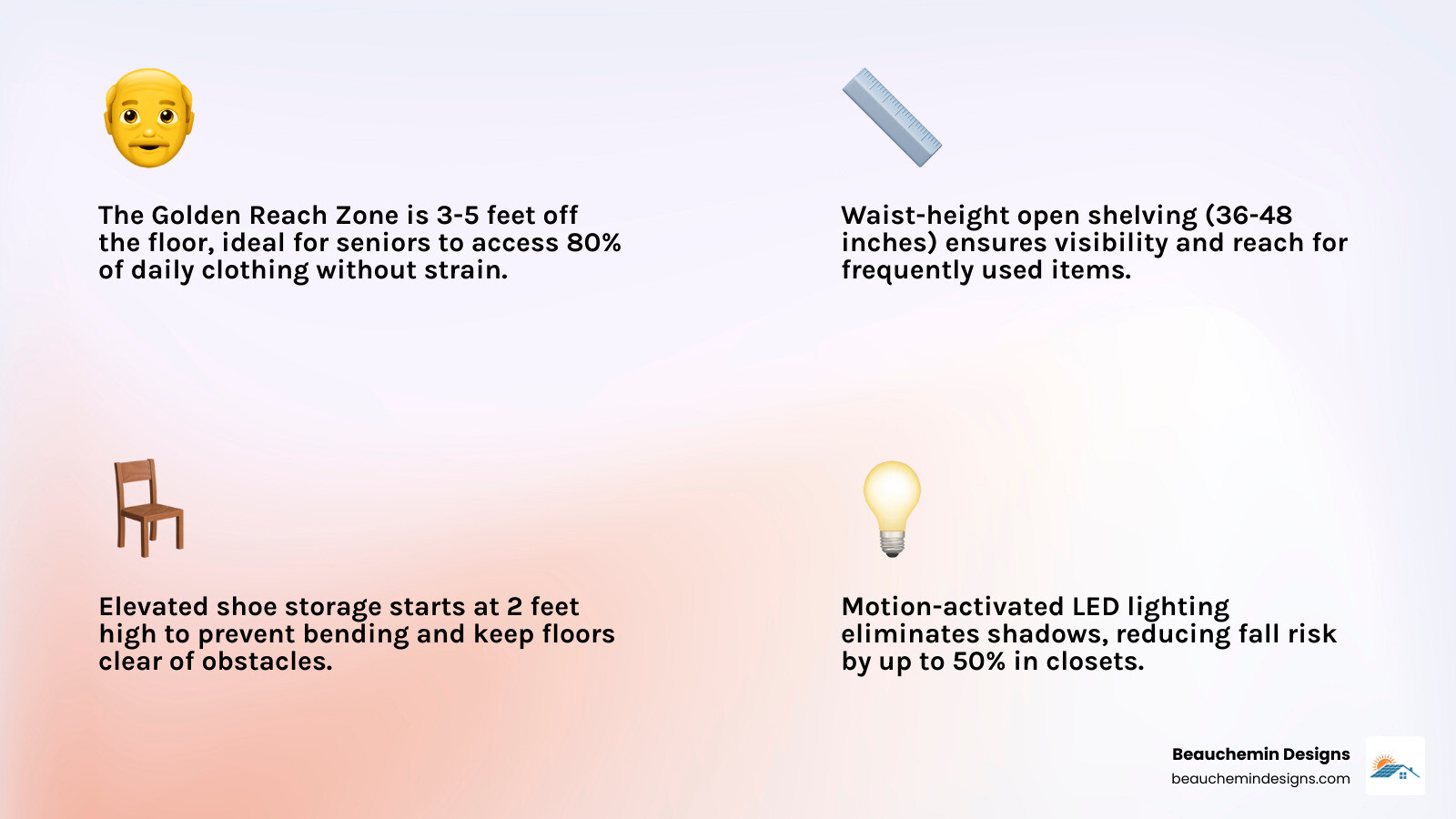
- Open shelving at waist height: keeps everyday items easy to see and grab without fighting doors or crouching
- Elevated shoe storage at least 2 feet off the floor: clears walking paths and cuts down on repeated bending
- Built-in seating with armrests: offers a safer place to sit while dressing and extra support when standing back up
Most people don’t think about their closet until it becomes a problem. But for seniors, a poorly designed closet can quietly chip away at independence — making it harder to get dressed, increasing fall risk, and adding daily frustration.
The good news is that a few targeted changes can make a closet dramatically safer and easier to use, without it looking institutional or clinical.
Core Safety Principles for Aging Friendly Closet Systems
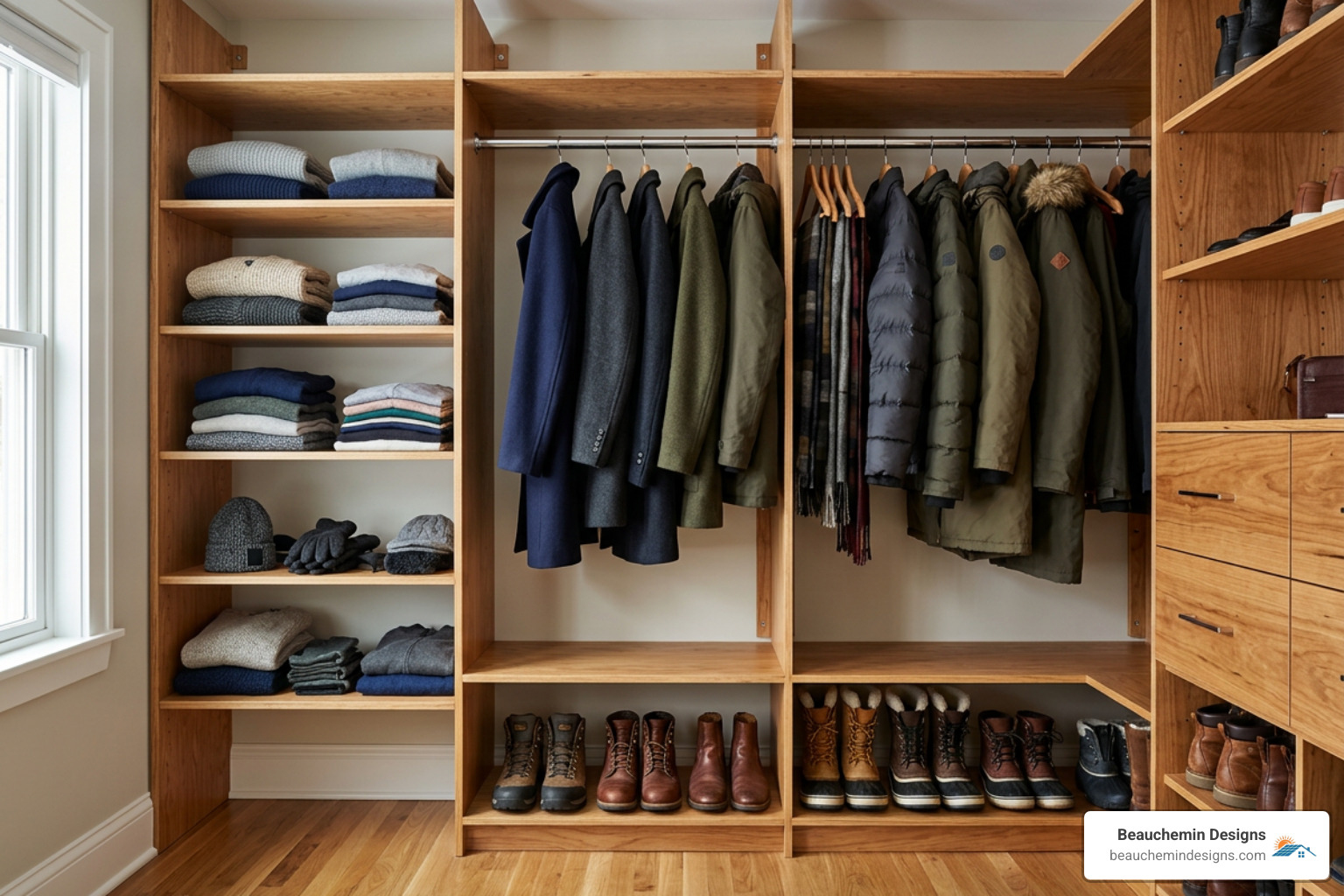
When we design for the New England climate—where heavy winter coats and bulky boots are a seasonal reality—structural integrity becomes a safety issue. In an aging-friendly home, the closet system shouldn’t just hold clothes; it should act as a stable architectural feature.
Structural Integrity and Material Choice
One of the most frequent mistakes we see is the use of “hung” closet systems that dangle from a single top rail. For a younger person, these are fine. For a senior, they are a hazard. As mobility changes, it is common for someone to instinctively grab a shelf or rod for balance. A hung system can pull away from the drywall under that sudden weight, leading to a dangerous collapse.
We recommend fixed, floor-based systems or wall-anchored units where every vertical upright is secured to the wall studs. This provides the weight-bearing capacity needed for heavy items and offers a sturdy “grab point” if someone loses their balance.
Material choice also matters for long-term durability. While many big-box systems use thin particleboard, we advocate for high-quality plywood or high-density furniture-grade composites. In our humid New England summers and damp coastal springs, cheap particleboard can swell, warp, and lose its ability to hold fasteners. Plywood offers superior moisture resistance and screw-holding strength, ensuring your aging-in-place investment lasts for decades.
| System Type | Safety Level | Pros | Cons |
|---|---|---|---|
| Wall-Hung | Moderate | Less expensive, easier to clean floors | Risk of collapse if grabbed; limited weight |
| Floor-Based | High | Maximum stability; looks “built-in”; supports heavy loads | More complex installation |
Independent vs. Assisted Living Layouts
The design of aging friendly closet systems should evolve based on the level of care required.
- Independent Living: Focus on maximizing autonomy. We use a mix of single and double-hanging rods, adjustable towers, and plenty of open shelving. This allows the user to organize their own space while keeping everything within a comfortable reach.
- Assisted Living: The focus shifts toward “reachability.” We often prioritize double-hanging rods at lower heights so that garments are accessible from a seated position (like a wheelchair or stool). Adjustable shelving is critical here, as needs can change month to month.
Essential Features of Accessible Closet Design
Visibility is safety. As eyesight naturally declines, a dark closet becomes a tripping hazard. Proper lighting is the “secret sauce” of a successful senior closet.
Maximizing Reach with Aging Friendly Closet Systems
High ceilings are great for home value, but they create “dead zones” for seniors. To solve this, we utilize pull-down rods (also known as drop-down units). These hydraulic or manual mechanisms allow you to pull an entire rack of clothes down to chest height, then swing it back up out of the way. This is a game-changer for wheelchair users or anyone who wants to avoid the danger of a step stool.
The “Golden Reach Zone”—the area between 3 and 5 feet off the floor—is where 80% of daily-use items should live. By keeping the most-used shirts, pants, and accessories in this strike zone, we minimize the physical toll of getting dressed.
Smart Lighting and Electrical Placement
Don’t settle for a single bulb in the center of the ceiling that casts shadows over everything you’re trying to find. We integrate:
- Motion-Activated LEDs: Lights that turn on automatically when the door opens or someone walks in. This eliminates the need to fumble for a switch in the dark.
- Illuminated Rods: LED strips built into the hanging rods themselves, lighting up every garment.
- Accessible Switches: We place light switches at 42 inches from the floor and electrical outlets at 18 inches. This makes them easier to reach from a wheelchair or for someone with limited shoulder mobility.
For more on how to coordinate these features with your home’s entryways, check out our guide on aging-in-place lighting and entries.
Storage Solutions to Minimize Bending and Reaching
Bending down to the floor is one of the most common ways seniors lose their balance or strain their backs. Aging friendly closet systems must bring the storage to the user.
Organizing Accessories in Aging Friendly Closet Systems
Shoes should never live on the floor. We recommend elevated shoe racks or slanted shelves starting at least 2 feet off the ground. This keeps the floor clear of tripping hazards and makes it easy to see every pair without stooping.
Open shelving is generally preferable to drawers for frequently used items like sweaters or hats. It provides immediate visual recognition, which is helpful for those managing cognitive changes. However, for smaller items like undergarments or socks, we suggest full-extension drawers. These pull out entirely so you can see what’s at the very back without reaching blindly into a dark box.
For those looking to maintain their personal style while simplifying their space, the AARP Style Guide for Women Over 50 offers great tips on curated wardrobes that fit perfectly into these streamlined systems.
Seasonal and Bulky Item Management
In Massachusetts and Rhode Island, we have to store heavy woolens for half the year. We suggest using vacuum-sealed bags to compress bulky sweaters, which can then be stored on lower (but not floor-level) shelves or in sliding baskets. This keeps the “Golden Reach Zone” clear for the clothes you actually need today.
Architectural Considerations: Doors, Seating, and Electrical
The “bones” of the closet—the doors and the floor space—are just as important as the shelves inside.
Door Hardware and Clearance
Standard round doorknobs can be difficult for hands with arthritis. We always recommend lever-style handles, which can be operated with a closed fist or even an elbow.
If space allows, sliding doors or “no-door” options (perhaps with a decorative curtain) are excellent. They eliminate the “swing space” required by traditional doors, which can interfere with walkers or wheelchairs. If you are building an ADU or a custom home, we plan for wider circulation paths—at least 36 to 48 inches—to ensure the closet is fully navigable.
Integrated Seating and Dressing Areas
Every walk-in aging friendly closet system should have a place to sit. A sturdy bench with armrests is best; armrests provide the necessary leverage to help someone stand up safely. This turns the closet into a “dressing station” where a senior can take their time, put on socks and shoes, and get ready without the fear of falling.
Planning Your Closet Renovation: From Decluttering to 3D Design
Before you buy a single shelf, you have to “assess the mess.” We recommend a three-pile approach: Keep, Donate, and Discard. Seniors often hold onto clothes they haven’t worn in a decade; purging these items is the first step toward a safer, more organized life.
The Value of Professional Design
While DIY kits are tempting, they often lack the “building science” approach we take at Beauchemin Designs. We use 3D design software to show you exactly how your closet will function before we ever cut a piece of wood. This allows us to test “reach ranges” and ensure the lighting won’t create glare.
For our clients in Greater Boston and across New England, we integrate these closet systems into a high-performance framework. This means we consider things like airflow (to prevent mold in coastal homes) and how the closet lighting ties into your home’s overall energy-efficient electrical plan.
Frequently Asked Questions about Senior Closets
Why are floor-based closet systems safer than wall-hung ones for seniors?
Floor-based systems transfer the weight of the clothes (and any person leaning on them) directly to the floor. Wall-hung systems rely entirely on the strength of the wall fasteners; if those fasteners fail or the drywall crumbles, the entire system can fall.
What is the ideal height for storing frequently used clothing?
We recommend the “Golden Reach Zone,” which is typically between 3 and 5 feet from the floor. This minimizes the need to reach above the head or bend below the waist.
How does motion-activated lighting improve closet safety?
It ensures that the space is illuminated the second you enter. This prevents the dangerous habit of “popping in real quick” to grab something in the dark, which is a leading cause of trips and falls.
Conclusion
Creating a home that supports you as you age isn’t about giving up style—it’s about gaining peace of mind. Aging friendly closet systems are a cornerstone of that strategy. By prioritizing structural stability, smart lighting, and ergonomic reach, you can maintain your daily routine with confidence and independence.
At Beauchemin Designs, we believe that every element of your home—from the building envelope to the closet rods—should work together to create a comfortable, durable, and future-ready environment. Whether you’re in Providence, the North Shore, or the Berkshires, we’re here to help you design a space that performs as well as it looks.
Ready to future-proof your home? Schedule an aging-in-place consultation with us today.