Why SunPower Solar Panels Are Still the Gold Standard for High-Performance Homes
SunPower solar panels consistently rank among the most efficient and durable residential solar options on the market today. If you’re comparing top solar brands, here’s the quick answer:
| Feature | SunPower Maxeon | SunPower Performance |
|---|---|---|
| Cell type | Monocrystalline IBC (back-contact) | Monocrystalline PERC (shingled) |
| Peak efficiency | Up to 22.8% | Up to 19.6% |
| Warranty | 40 years (with registration) | 25 years |
| Best for | Maximum output, tight roof space | Cost-effective high performance |
| Power output guarantee | No more than 10% loss in 25 years | No more than 10% loss in 25 years |
Both product lines are manufactured by Maxeon Solar Technologies, which spun off from SunPower Corporation in 2020. SunPower filed for Chapter 11 bankruptcy in August 2024, so if you’re evaluating these panels today, understanding that corporate history matters — especially for warranty and service expectations.
SunPower panels are not the cheapest option. A 5 kW system typically runs $11,150 to $46,100 before tax credits. But for homeowners who want the most power from the least roof space, backed by one of the longest warranties in the industry, they remain hard to beat.
I’m Edward Beauchemin, a residential designer and building performance specialist at Beauchemin Designs, and I’ve spent decades helping New England homeowners evaluate SunPower solar panels as part of broader high-performance home strategies — from early-stage energy modeling to final installation. In this guide, I’ll walk you through everything you need to know to make a confident, informed decision.
The Engineering Excellence of SunPower Solar Panels
When we talk about sunpower solar panels, we are really talking about a legacy of engineering that changed the way the industry views efficiency. While many manufacturers were content with incremental gains in standard cell design, the engineers behind SunPower technology took a fundamentally different approach.
Maxeon Technology and IBC Cells
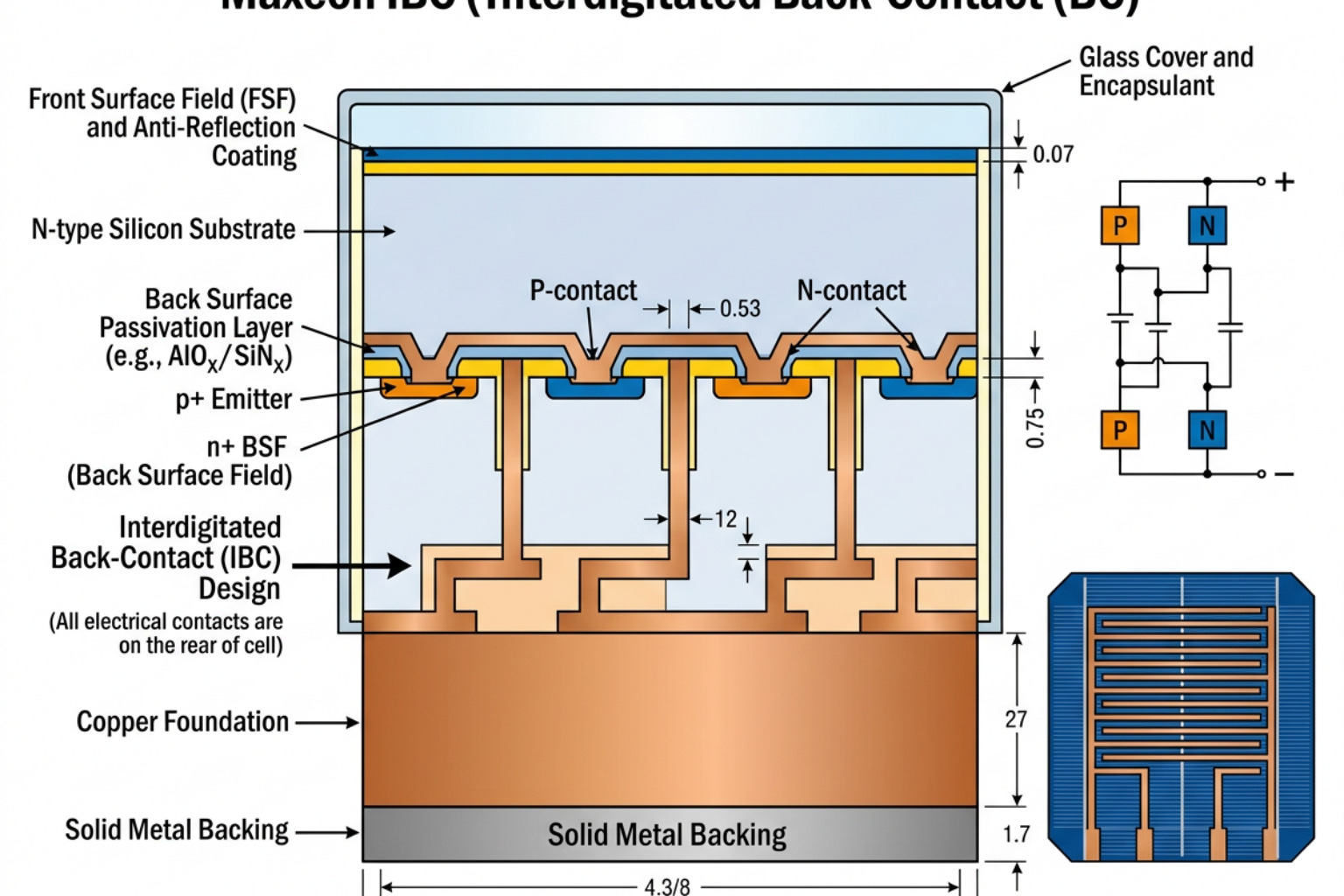
The crown jewel of the lineup is the Maxeon cell architecture. Most solar panels have thin silver “fingers” or busbars on the front to collect electricity. These actually block a portion of the sunlight. SunPower’s Interdigitated Back Contact (IBC) design moves all the electrical contacts to the rear of the cell. This creates a sleek, solid-black surface that absorbs more light and eliminates the primary cause of cell failure: front-surface corrosion and shading from the wires themselves.
Solid Metal Backing and Durability
Unlike conventional cells that are brittle and prone to cracking under temperature swings, Maxeon cells are built on a solid copper foundation. This “solid metal backing” acts like a heat sink and a structural backbone. Even if a cell develops a small crack, the copper backing keeps the electrical path intact. This is why these panels are often cited as the most reliable in the world.
Technical Specifications of SunPower Performance 3 AC Modules
For those looking at the Performance line, the engineering is slightly different but no less impressive. These use “shingled cells,” where monocrystalline PERC (Passivated Emitter and Rear Cell) strips are overlapped like roof shingles.
- Efficiency: 18.9% to 19.6%.
- Design: Shingled cell black backsheet with a black frame.
- Microinverter: Factory-integrated Enphase IQ 7A microinverters.
- Longevity: Estimated useful life of 35 years.
By using conductive adhesive instead of traditional soldered ribbons, these panels reduce the mechanical stress on the cells, which is a huge plus for our variable New England weather.
Maximizing Efficiency with SunPower Solar Panels
Efficiency isn’t just a vanity metric; it’s about power density. If you have a small roof in Cambridge or a historic home in Providence with limited unshaded space, you need every square inch to count.
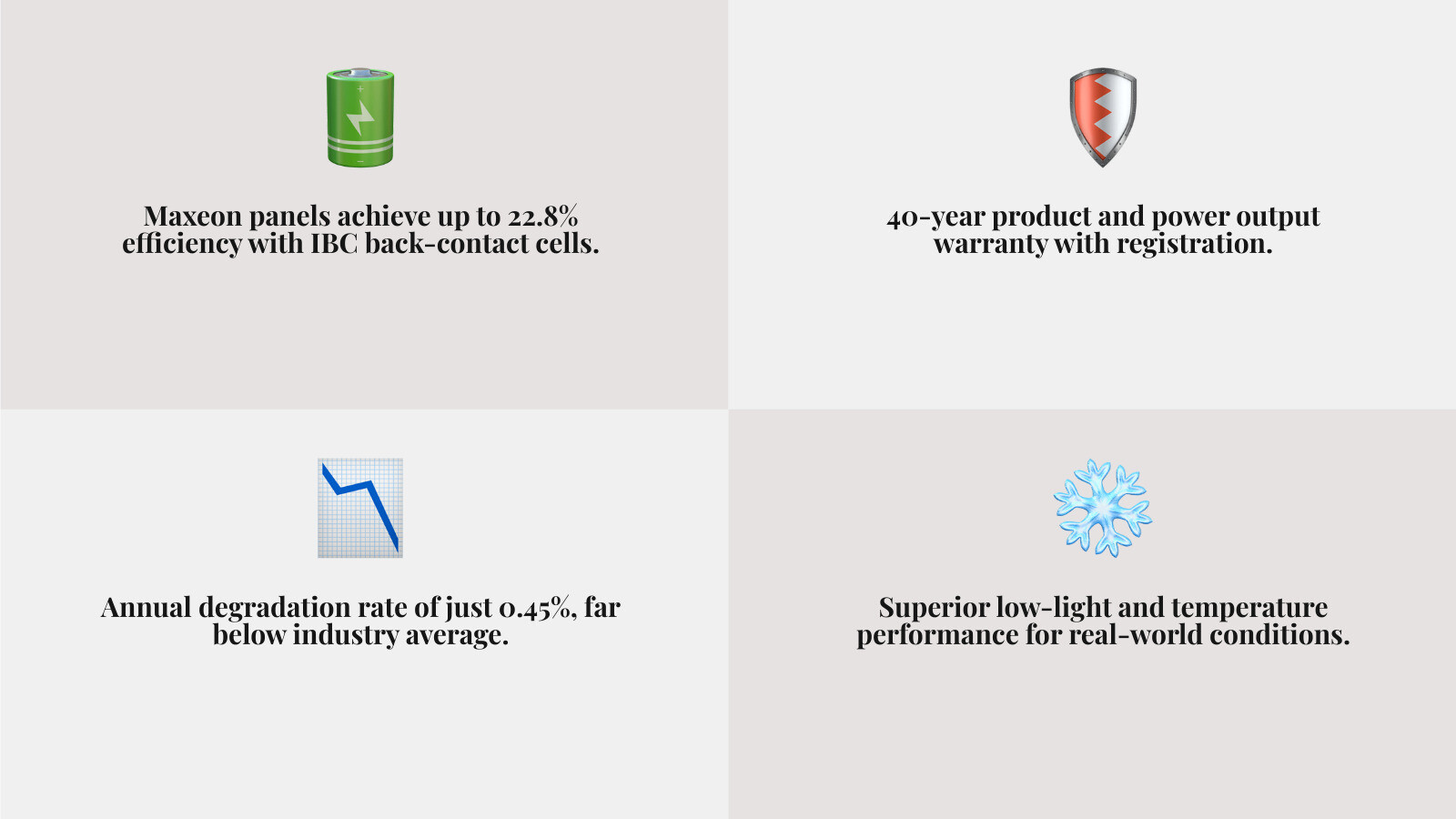
- M-Series and X-Series: These panels offer efficiencies of up to 22.8%, some of the highest available to homeowners.
- Spectrum Utilization: Because of the IBC design, these panels “wake up” earlier in the morning and stay active later in the evening, capturing a broader spectrum of light than conventional panels.
- Low-Light Performance: They are specifically designed to maintain high output even on those overcast, gray days we often see in the MetroWest or the Pioneer Valley.
Understanding the Investment in SunPower Solar Panels
Let’s talk numbers. Quality comes at a price. A 5-kilowatt SunPower system typically costs between $11,150 and $46,100, which translates to roughly $2.23 to $9.22 per watt before incentives.
Why the wide range? It depends on the complexity of your roof, the specific panel series you choose (Maxeon vs. Performance), and whether you include storage. However, when you factor in the 25 to 40-year lifespan and the fact that they produce up to 7% more energy over 25 years compared to conventional mono PERC panels, the ROI becomes much clearer. Financing options like $0-down solar loans are still widely available through third-party lenders, making this premium technology accessible for many.
Learn more about our energy conservation services to see how solar fits into a whole-home performance plan.
Efficiency and Performance in New England Climates
In New England, we don’t just design for the sun; we design for the elements. From the salt air of Newport and Cape Cod to the heavy snows of the Berkshires, sunpower solar panels are built to endure.
Snow Load and Hail Resistance
SunPower panels are tested to withstand a snow load of 5400 Pa (about 113 lbs per square foot). This is critical for homes in Worcester or the Pioneer Valley where heavy, wet snow can sit on a roof for weeks. They are also rated to survive the impact of 25 mm diameter hail traveling at 23 meters per second.
Coastal Resilience and Salt Mist
For our clients in Marblehead, Hingham, and Narragansett, salt mist corrosion is a real concern. The tin-plated copper foundation of the Maxeon cell is inherently more resistant to the corrosive effects of saltwater than the silver-and-aluminum components found in cheaper panels. Furthermore, the junction boxes are often potted with silicone to prevent moisture ingress.
Temperature Coefficients and Humidity
While solar panels love light, they actually dislike heat. SunPower panels have a superior temperature coefficient, meaning they lose less efficiency as they heat up during a humid Massachusetts summer. This ensures consistent power production year-round. Integrating these panels with proper internal air quality and ventilation systems ensures that while your roof is generating power, your home’s interior remains healthy and dry.
Warranty and Longevity: The 40-Year Standard
One of the biggest differentiators for sunpower solar panels has historically been the warranty. While most of the industry offers 12 to 15 years for the product and 25 years for performance, SunPower (via Maxeon) pushed the envelope to a 40-year standard for their premium lines.
| Warranty Component | Maxeon Series | Performance Series |
|---|---|---|
| Product Warranty | 40 Years (with registration) | 25 Years |
| Power Warranty | 40 Years (88.3% at Yr 40) | 25 Years (87.2% at Yr 25) |
| Service/Labor | Included (select dealers) | Included (select dealers) |
| Annual Degradation | 0.25% | 0.45% |
The Complete Confidence Warranty
This warranty covers the entire system, including the panels and the factory-integrated Enphase microinverters. It’s important to note that the 40-year warranty requires registration; otherwise, it defaults to 25 years. SunPower guarantees that their panels won’t lose more than 10% of their original power output in a 25-year period.
With an estimated useful life of 35 to 40 years, these systems are designed to outlast the mortgages of many of the homes we design in Lexington and Concord. Even after 25 years, a SunPower Performance panel is warranted to produce at least 87.2% of its original rated power.
Integrating Solar into High-Performance Home Design
At Beauchemin Designs, we believe solar shouldn’t be an afterthought. We integrate sunpower solar panels into the very DNA of our architectural plans.
Curb Appeal and InvisiMount
Aesthetics matter, especially on custom homes in historic areas like Newton or Brookline. SunPower’s InvisiMount system is a low-profile racking solution that hides the hardware, making the panels appear to float just above the roofline. Combined with their “all-black” sleek design, they complement modern and traditional architecture alike.
Solar-Ready Infrastructure and HERS Modeling
We utilize early-stage HERS modeling to determine the optimal orientation and tilt for your solar array. By planning for “solar-ready” infrastructure during the design phase, we ensure that the roof structure can handle the loads and that the electrical conduits are pre-installed, saving you thousands in future labor costs.
Net-Zero and Electrification
Whether you are building a new custom home in Wellesley or an ADU in North Smithfield, RI, solar is the engine that drives net-zero goals. By combining high-efficiency panels with blower door testing and airtightness, we can reduce your home’s energy demand to the point where the solar array covers nearly 100% of your needs, including EV charging and heat pumps.
Beyond the Panels: Storage and Monitoring
A modern solar system is more than just hardware on the roof; it’s a smart energy ecosystem.
- SunVault Storage: SunPower’s SunVault battery system provides seamless backup during outages. It uses intelligent software to manage when you use your stored energy, allowing you to avoid “peak” utility rates in areas like Boston or Providence.
- mySunPower App: This app gives homeowners real-time data on energy production and consumption. You can see exactly how much energy your geothermal heat pumps are using and adjust your habits accordingly.
- EnergyLink: This monitoring hardware ensures your system is always connected and performing at its peak, alerting you to any issues before they impact your bill.
Specialized Applications: Marine and Off-Grid Power
SunPower technology isn’t just for rooftops. Their cells are the gold standard for marine and off-grid applications due to their extreme durability and efficiency in tight spaces.
Marine-Grade Performance
For yacht owners in Narragansett Bay or the North Shore, space is the ultimate luxury. A 165 Watt Rigid Marine Solar Panel using SunPower A+ Grade cells can achieve a conversion efficiency of 25.4%.
- E-Flex Series: These flexible panels can be mounted on curved surfaces like a boat’s bimini or deck.
- Corrosion Resistance: With junction boxes potted in silicone, these panels are built to survive constant saltwater exposure.
- Off-Grid Independence: High-efficiency cells collect more power at low and high sun angles, which is vital when you’re “sailing with the sun” and can’t always point your panels perfectly at the horizon.
Frequently Asked Questions about SunPower
What is the current business status of SunPower?
SunPower Corporation filed for Chapter 11 bankruptcy on August 5, 2024. As part of this restructuring, they planned to sell assets to Complete Solaria and discontinued new installations. However, it is vital to remember that Maxeon Solar Technologies—the company that actually manufactures the panels—is a separate, international entity that continues to operate and honor its manufacturing warranties. If you already have a system, your warranty for the panels themselves is typically held by Maxeon or the microinverter manufacturer (Enphase).
How do SunPower panels compare to conventional PERC panels?
SunPower Performance panels deliver up to 7% more energy in the same space over 25 years compared to conventional mono PERC panels. This is due to lower degradation rates (0.45% vs 0.6-0.8%) and better shade tolerance provided by the shingled cell design.
Can SunPower systems be installed on any roof type?
Yes. Whether you have a tile roof in a historic district, standing-seam metal roofing, or standard asphalt shingles, SunPower’s mounting systems are designed for versatility. Their low-profile design ensures they look integrated rather than “bolted on.”
Conclusion
At Beauchemin Designs, our mission is to create homes that are as durable and efficient as they are beautiful. SunPower solar panels remain a key component in our high-performance toolkit for New England. Despite the recent corporate shifts at SunPower Corp, the underlying Maxeon technology remains the benchmark for efficiency and longevity in the solar industry.
If you are planning a custom home, an ADU, or a major renovation in Massachusetts or Rhode Island, we are here to help you navigate the complexities of building science and renewable energy. From climate-responsive design to future-ready infrastructure, we ensure your home is built for the long haul.
Start your high-performance home journey with us today and discover how we can help you achieve energy independence with the world’s best solar technology.